From Nordic Model to Future Model
With a skilled and highly-educated workforce, a high degree of trust, social cohesion, social capital, transparency and governance, a commitment to values as well as a world-class infrastructure and regulatory framework, the Nordics already have some of the basic “ingredients” needed to cook the “circular dish,” to coin a phrase used by Ladeja Godina Košir, Chair, Co-ordination Group, European Circular Economy Stakeholder Platform (ECESP). How can the Nordic way of thinking, living and working help transform the economies in the region and beyond?
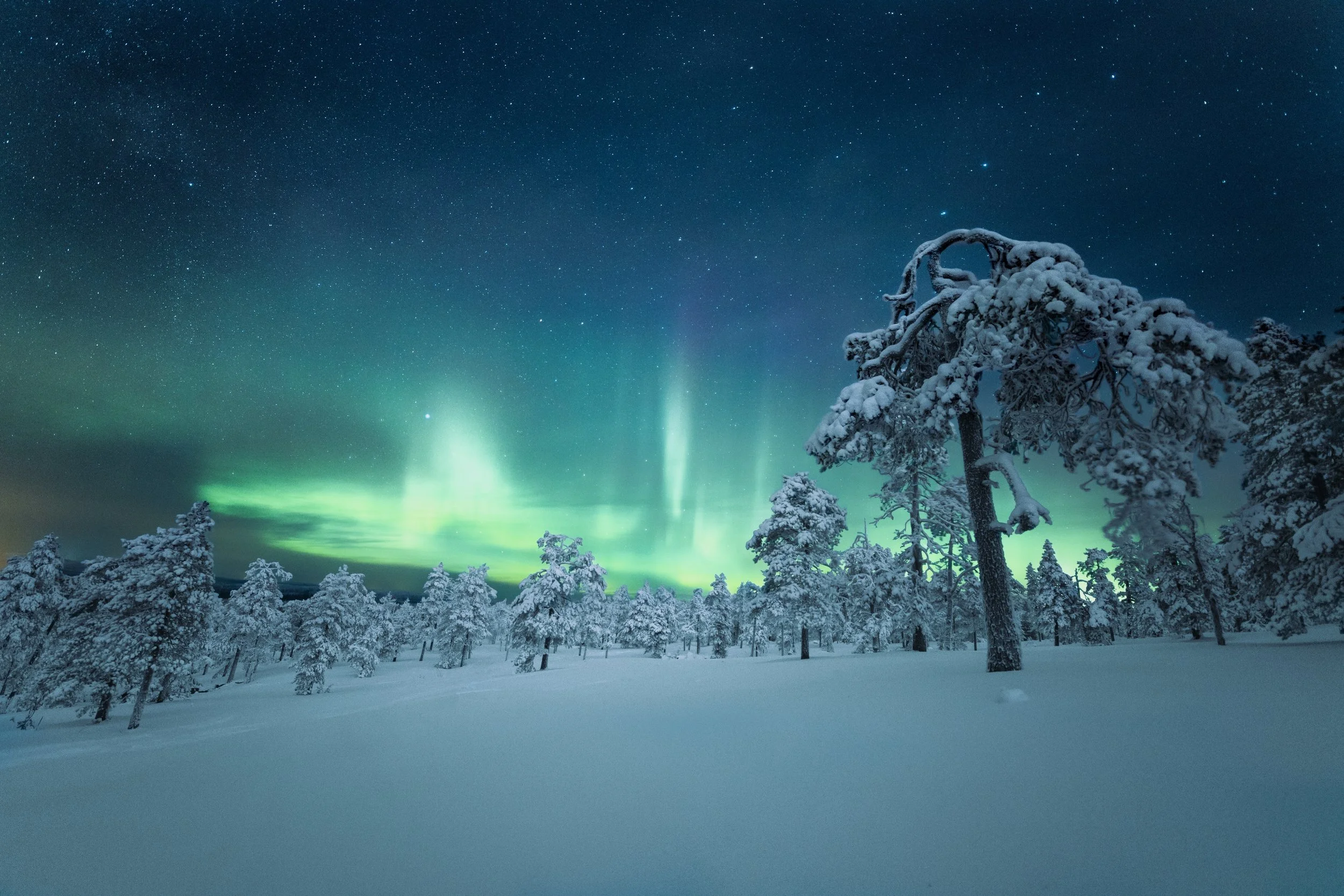
The economic, social and ecological impact of the region’s circular transformation is massive. The Nordic Region consists of five sovereign states—Denmark, Finland, Iceland, Norway and Sweden—plus the three autonomous territories connected to these states: the Faroe Islands and Greenland (Denmark) as well as Åland (Finland). With a population of over 27 million, the Nordic economies combined represent the 12th-largest in the world.
Despite their differences and—to a certain extent—barriers, the Nordic countries have a number of similarities that lie at the heart of the region’s people and economies. The Nordic model of welfare is well-known in the world, the political climate in the region is quite stable and the public trust in institutions is high. The Nordics are unique in a number of other areas as well, which will be further explored in this feature.
On February 2, 2013, an interesting article appearing in the Leaders section of the print edition of The Economist, under the headline “The next supermodel,” highlighted that the Nordic countries are probably the best-governed in the world. “The Nordics cluster at the top of league tables of everything from economic competitiveness to social health to happiness.” The article concluded that “the world will be studying the Nordic model for years to come.” (Read the “Northern Lights” special report.)
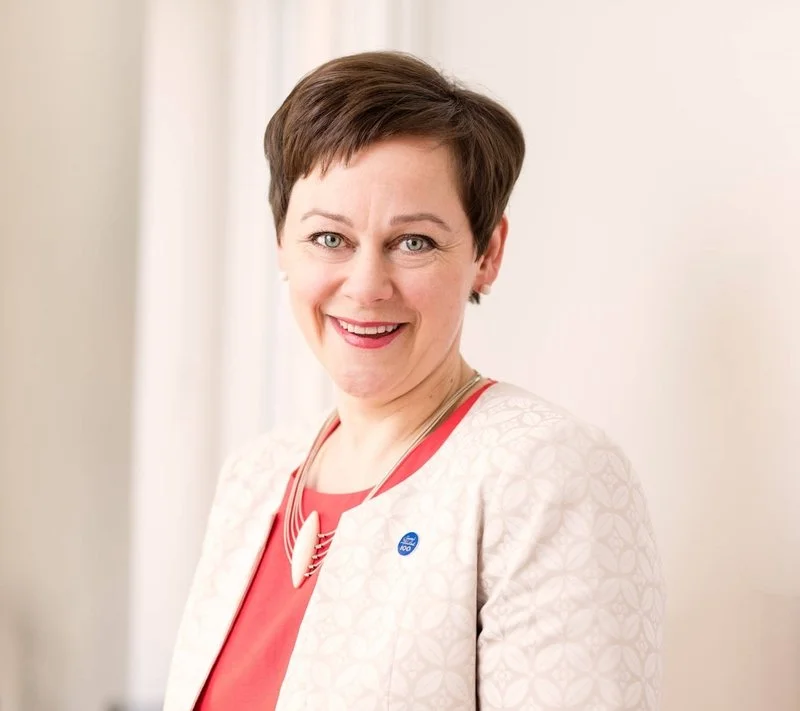
Paula Lehtomäki, Secretary General, Nordic Council of Ministers
The Nordic region 2030
“The circular economy and bio economy are very much in the heart of Nordic co-operation,” according to Paula Lehtomäki, Secretary General, Nordic Council of Ministers. “In August 2019, the Nordic prime ministers adapted a new ‘Vision 2030’ for the co-operation, stating that the Nordics should become the world’s most sustainable and integrated region by 2030. This means working for a green, competitive and inclusive Nordic Region, where the circular economy can be a very central tool in achieving the targets.”
She continues by saying that, when looking at the 17 Sustainable Development Goals (SDGs) and 169 targets, “the Nordics are doing generally very well,” with two exceptions: climate action (SDG 13) and sustainable consumption and production (SDG 12). Both of these SDGs are directly linked to the circular economy. “There we still have a lot to do,” Lehtomäki believes. “The complexity of the challenges calls for a systemic transformation. We need to work together and rethink our system for the economy and consumer-based lifestyles…and also need to jointly accelerate our actions to make the necessary system transformation.”
According to SolAbility, a Swiss-Korean joint-venture founded in 2005, Sweden is leading the Global Sustainable Competitiveness Index (GSCI) 2020, tightly followed by Iceland, Denmark and Finland, while Norway is ranked in ninth position. The top 20 is dominated by Northern European countries, including the Baltic states. GSCI is the most comprehensive ranking of countries currently available. The success of nations currently is mostly expressed in terms of economic output—GDP (Gross Domestic Product), GDP per capita, GDP growth. The GDP or GNI (Gross National Income), however, is limited to the current economic output, and does not evaluate underlying structures.
According to the European Innovation Scoreboard (EIS) 2020, Denmark, Finland and Sweden are Europe’s Innovation Leaders, followed by The Netherlands and Luxembourg. With a highly-educated population enjoying a high standard of living and strong purchasing power, the Nordic Region is an excellent playground for innovative companies wanting to test, market or produce their circular economy solutions.
Action plan
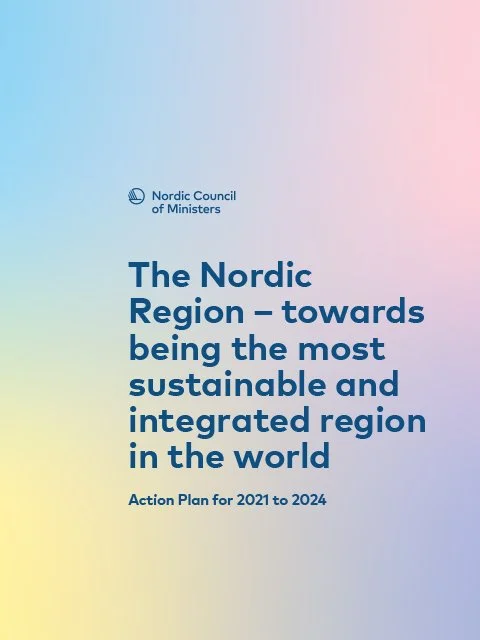
The Nordic Council of Ministers’ action plan for Vision 2030 has been approved by the Ministers for Nordic Co-operation and runs from 2021 to 2024. In order to realise this Vision 2030, over the next four years three strategic areas are being given priority in the work of the Nordic Council of Ministers: a green Nordic Region, a competitive Nordic Region, and a socially sustainable Nordic Region.
Looking closer at one of these three strategic priority areas, A green Nordic Region, the Vision 2030 states that “together, we will promote a green transition of our societies and work towards carbon neutrality and a sustainable circular and bio-based economy.” Linked primarily to the SDGs 6 (ensure access to water and sanitation for all), 7 (affordable and clean energy), 11 (sustainable cities and communities), 12, 13, 14 (life below water) as well as 15 (life on land) and also linked to the objectives of the Paris Agreement, a legally-binding international treaty on climate change, the action plan’s strategic objective includes the following:
By 2024, the Nordic Council of Ministers will:
strengthen research and development and the promotion of solutions that support carbon neutrality and climate adaptation, including in relation to transport, construction, food, and energy;
help to safeguard biodiversity and ensure the sustainable use of the Nordic Region’s nature and seas;
promote a circular and bio-based economy, sustainable and competitive production, sustainable food systems, and resource-efficient and non-toxic cycles in the Nordic Region;
make it much easier and more attractive for Nordic consumers to prioritise healthy and environmentally- and climate-friendly choices, with joint efforts relating to sustainable consumption; and
contribute to the positive development of international co-operation on the environment and climate, such as by promoting Nordic green solutions in the rest of the world.
“Nordic Innovation, as a Nordic institution, plays an important role in following-up this vision, especially related to opportunities for companies,” says Lehtomäki, who took over as the Secretary General of the Nordic Council of Ministers in March 2019, moving from a position as State Secretary in Finland’s Prime Minister’s Office. “This includes gathering the actors and building circular ecosystems, like the ones we see today.”
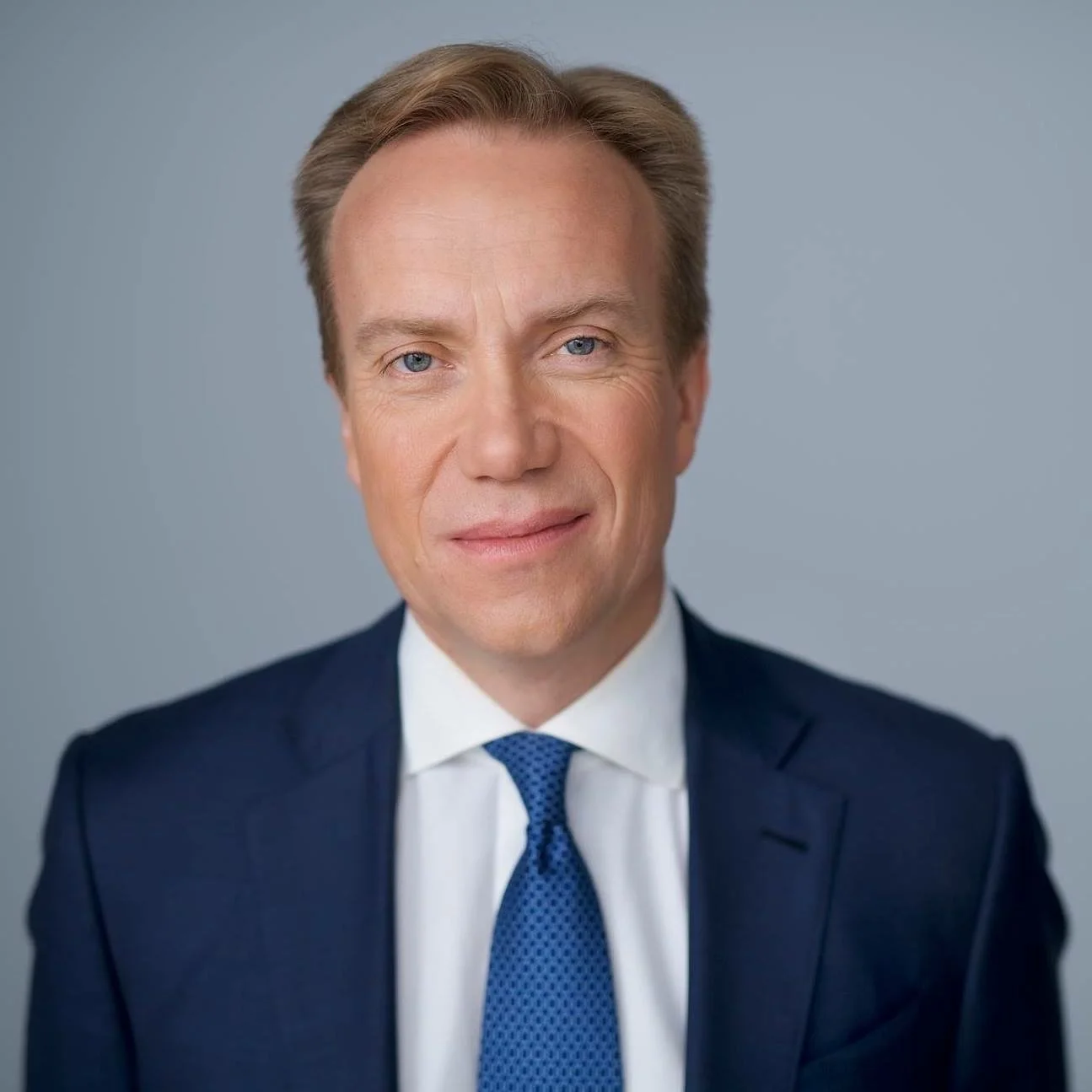
Børge Brende, President, World Economic Forum
Leading star
“With the Nordic model—with a practical, solution-oriented approach and keeping everybody on board—as a leading star, with the economic potential of more than 27 million inhabitants and a GDP of USD 1.4 billion, and with the circular economy as a driving force, we shall succeed in the green transition,” concludes the Finnish politician.
“So why are the Nordic countries the leading stars when it comes to sustainability?” asks Børge Brende, President, World Economic Forum, based in Geneva. “The fundamental pillars of the Nordic economic model are the very same ones that support a green approach. One of the pillars of the Nordic model is multilateral collaboration, both regionally and globally. Common problems have to be solved with common solutions.”
Brende served as Norway’s Minister of Foreign Affairs (2013-2017), Minister of the Environment (2001-2004) and Minister of Trade and Industry (2004-2005) as well as Chairman of the United Nations Commission on Sustainable Development (2003-2004). The World Economic Forum has closely collaborated with the Finnish Innovation Fund Sitra and the World Circular Economy Forum (WCEF). “Co-operation between governments has immense economic value and is the very ingredient needed to scale the circular economy.”
“In November 2020, Sweden, Denmark and Norway partnered with the Asian Development Bank to disseminate best practices when it comes to waste management, producer responsibility and the circular economy. And the Danish and Finnish governments as well as the Nordic Council are supporters of the African Circular Economy Alliance (ACEA). This country-led platform developed by the World Economic Forum and the Government of Rwanda is advancing high-impact circular economy projects in 10 countries across the African continent.”
In 2018, the World Economic Forum created PACE, the Platform for Accelerating the Circular Economy, a global community of more than 80 leaders working together to accelerate the transition to a circular economy. It focuses on catalysing projects and leadership in areas that require deep collaboration between business, government and civil society, creating a space for leaders to work in partnership and overcome challenges together. Now hosted by the World Resources Institute (WRI), PACE is facilitated by a full-time team in The Hague, The Netherlands. “This multi-stakeholder approach, I think, is crucial,” according to Brende. He believes the Nordic model can “serve as a North Star: if you follow it, you can head towards a resilient, sustainable future, while strengthening our economies today.”
Circular Gap Reports
The first Nordic national Circularity Gap Report was published and presented in August 2020. The Circular Gap Report Norway concludes that the Norwegian economy is only 2.4 per cent circular, which means that of all the materials consumed in the country, 97.6 per cent are not cycled back into the economy. By comparison, the global average is 8.6 per cent circular, according to the Circularity Gap Report 2020, published annually by Circle Economy and launched in Davos. This is down from 9.1 per cent in 2018, when the annual report was first launched. (Download the Circularity Gap Report 2021.) Clearly, there is a huge untapped potential for circularity globally, including in the Nordics. “We cannot take a business-as-usual approach when it comes to the circular economy,” says Brende.
Following Norway’s lead, similar Circularity Gap Reports could be published in other Nordic nations as well—and even for the region as a whole. With the Circularity Gap Report Norway, “we now have a baseline for our country, which is also linked to the global one,” says Frank Jaegtnes, CEO, Norwegian Electrical Trade Association (EFO), a trade association of suppliers and wholesalers of electrical materials, equipment and solutions, and member of Skift, a Norwegian organisation comprised of companies wanting to take lead in the fight against climate change. “Other countries are doing the same kind of benchmarking now and I would really recommend the Nordic countries to do the same as well,” Jaegtnes points out. “If you conduct this report, you can compare performance across nations and look at material flows in order to see how can we learn from each other. You can get a common tool to look into how to improve. Based on that, I think there is a very good potential to do joint projects in the Nordic region. This is the best possible basis for good collaboration.”
“We need to establish the same measurement as the Norwegians did and create a Nordic benchmark, which would be tool to further integrate our co-operation” in the region, says Kim Hjerrild, Head of Circular Economy, Lifestyle & Design Cluster and Managing Partner, Nordic Circular Hotspot, Denmark.
Trust, transparency and collaboration
Built on trust, transparency and collaboration, the Nordic model enables the sharing of knowledge across businesses, sectors and industries. “With transparency comes trust, which is necessary to foster strong collaborations, and this is exactly what is needed to spark the circular transition,” says Einar Kleppe Holthe, founder, Natural State and Managing Partners, Nordic Circular Hotspot, Norway.
Finland aims to become a global pioneer in a world in which our economic competitiveness and wellbeing can no longer be based on the wasteful use of natural resources. With the first national roadmap—the Finnish Roadmap to a Circular Economy—published as early as 2016, under the leadership of Sitra. On December 5, 1967, Sitra received a gift from the Finnish Parliament to an independent Finland on its 50th birthday. The 53-year-old organisation is still under the direct control of the Finnish Parliament.
The Nordics are very good at combining the public-private partnership model, according to Kari Herlevi, who leads the circular economy area at Sitra. In a small country like Finland, with 5.5 million people, and other Nordic nations, it is easier to do this. “It certainly is not easy, but we can bring the parties together. The Finnish citizens are backing this up. It is not about ‘should we move,’ but more about ‘how to move’ from intentions to actions.” In 2018, 83 per cent of Finns fully or partly agree that Finland should take action to promote the circular economy, even if other nations are not doing so, according to a new survey commissioned by Sitra. This figure has slightly decreased to 78 per cent (2021) (download the survey in Finnish).
Digitalisation and technology
Embracing technology “is crucial to the circular economy,” according to Brende. “Big data analytics, for instance, can help redesign global value chains from being linear to being circular. And smart robots are helping dismantle used products into also reusable parts. It’s an amazing development.” Just one Nordic example of how digitalisation is helping the circular transition is Bergen-based WasteIQ AS, a digital platform for data-driven resource management. The Norwegian SaaS company liberates and enhances data, enables easy-to-manage identity management across systems as well as new business models, such as “pay as you throw.”
Nordic brand and youth
The Nordic brand holds some values, perspectives and history with huge potential in the green and circular transition. This brand could be defined as modern, democratic, equal, responsible, high standard of living, open-minded travellers, traditional and cosmopolitan, innovative and trendsetting, according to Hjerrild. At the same time, the Nordics are also “very still big consumers and are not really approaching the targets that we need to approach,” he says. “We are welfare lovers, because we want to have everyone on board and it is really hard to make these very strict transitions...while keeping our welfare systems intact.” It is also very important to address and involve the youth in the Nordics, he stresses. “Boomers like myself need to step down and make room for youth to actually play their part right now, and not just in a decade from now.”
“We need to think youth, youth and youth,” says Hjerrild. “It is their future and we therefore need to integrate sustainability and circularity thinking into all relevant educations” and curriculum design. “The Finns are taking the lead in this field and we should copy that. We should mobilise the Nordic Council of Ministers. I would like to also mention entrepreneurship and ensuring young people have better access to entrepreneurship for the green transition.” Finland leads the world with higher education institutions that offer circular economy learnings, according to research by the Ellen MacArthur Foundation, a British charity that works in education and training, business and government, insight and analysis, systemic initiatives and communications to accelerate the transition to a circular economy.
“In the current linear economy, differences divide, while in a circular economy, differences unite,” says Cathrine Barth, co-founder, Circularities and Managing Partner, Nordic Circular Hotspot. “Fifty years ago, in 1971, the Nordic Council of Ministers was established in order to potential of collaboration.” “People in the Nordics love nature and going out in the wild, man and nature together” in a variety of ways and in harmony. Some of the elements of Nordic human potential she believes include solitude, nature, isolation, independence and the “folk songs of our nations.” However, she also emphasises that the “Nordic consumption levels are out of control.” Half the population in the Nordics still do not know what the circular economy is, except for the Finns.
New Nordic model for co-operation
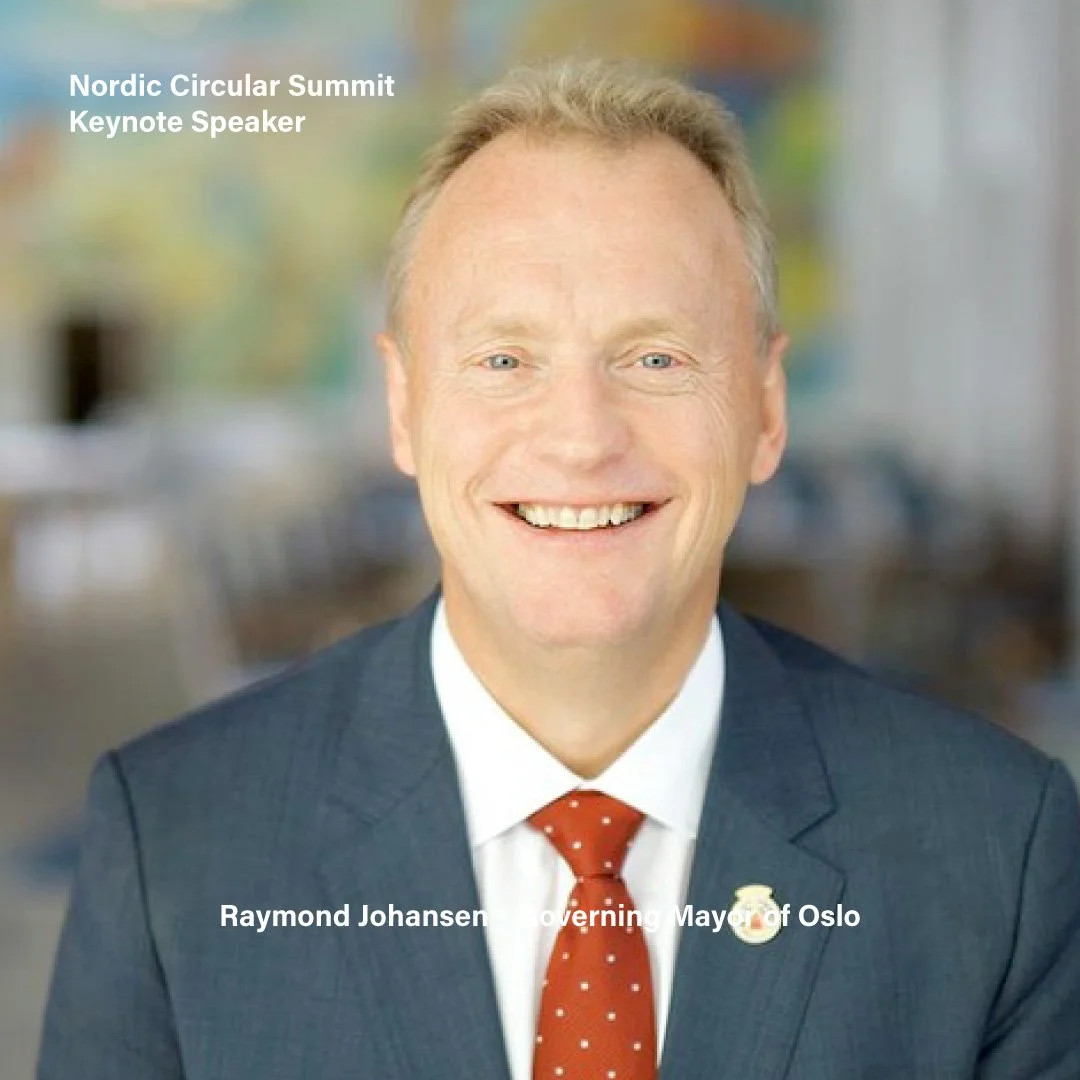
“The Nordic Circular Summit helps advance and speed up the development of the circular economy,” says Raymond Johansen, Governing Mayor of Oslo. “The Nordic capitals have, each one of us, different super skills becoming circular. Only by learning from each other will we optimise the new Nordic model for co-operation.”
“There is leadership in the Nordic countries, which can show pathways for other nations outside the region,” says David B. McGinty, Global Director, PACE, who is based in The Hague and spends his time outside of PACE as an angel investor. “How do you link start-ups and disrupters with established companies? This is something where Nordic countries that have done well in circularity in the past can really show the way.
This feature has been written by Marie Storli and Peter Michel Heilmann based on the speeches and conversations that took place during the Nordic Circular Summit 2020, an official WCEF Side Event held on November 26-27. A milestone virtual event gathering over 1,000 delegates from around the world, the summit was co-hosted by the Nordic Circular Hotspot and Nordic Innovation.